Person: Civilians, Political Leaders, and Local Patriots

  • John Witherspoon

    John Witherspoon

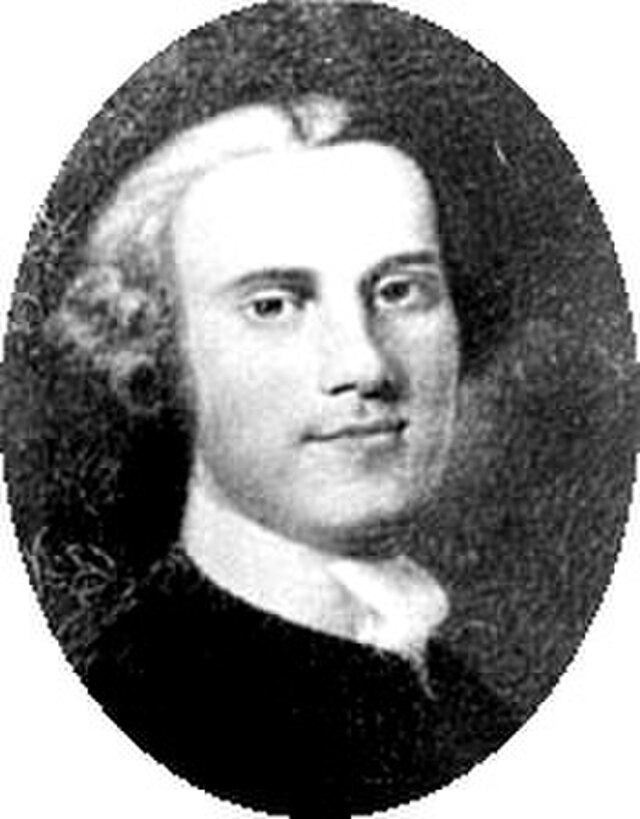
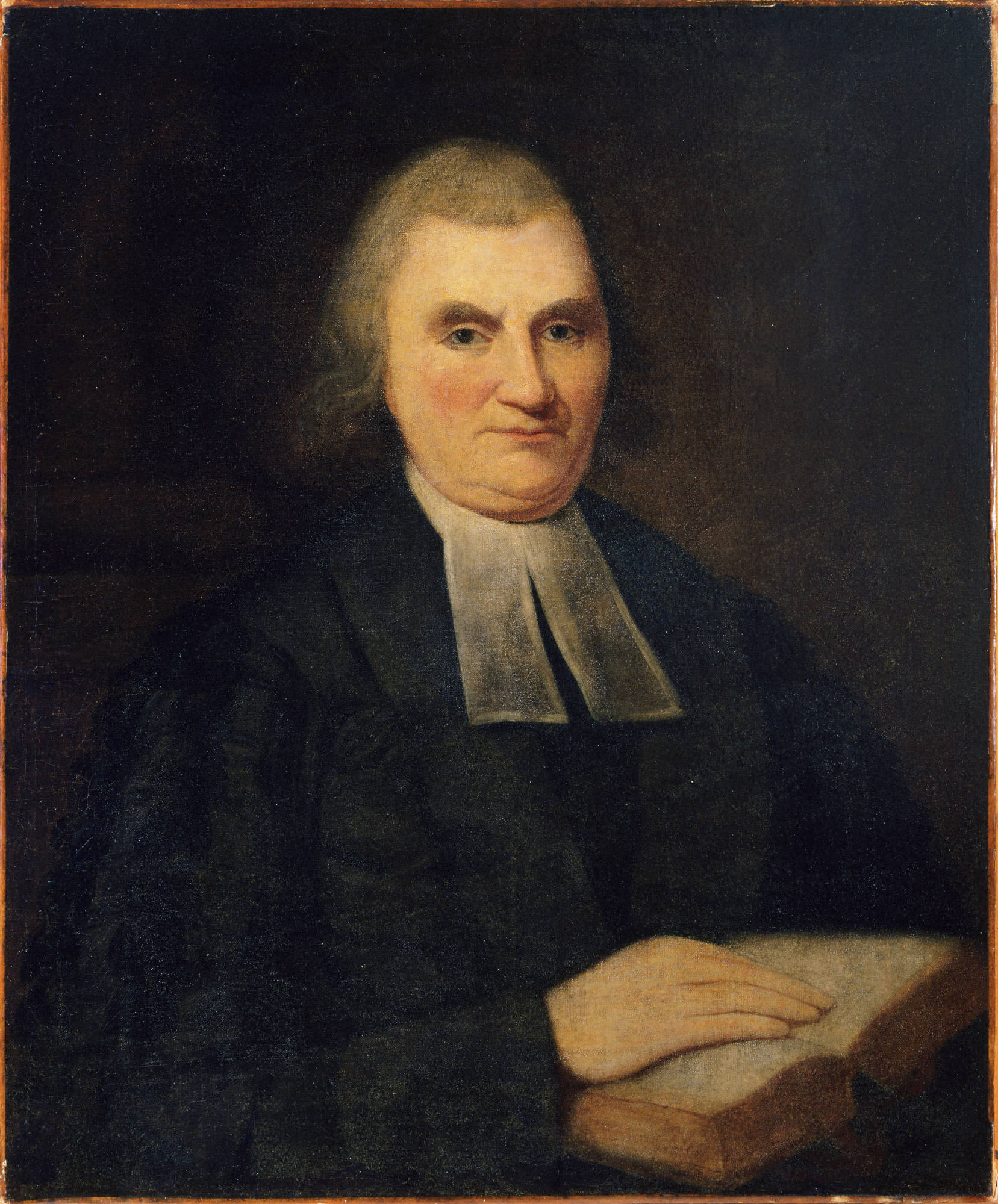
    I was born in 1723 at Yester, Scotland, not far from Edinburgh, and was educated at Haddington, where my father was minister. After studies at the University of St. Andrews and the University of Edinburgh I served as Presbyterian minister at Beith, where I married Elizabeth Montgomery, and then at Paisley. I became deeply involved in the church debates and conflicts of my time. In 1766 I was invited by the school trustees to become president of the College of New Jersey (now Princeton). At first I declined, but when called a second time, and after being personally asked by Richard Stockton who was visiting England in 1768, I accepted. In August 1768, after eleven weeks at sea on the brigantine Peggy, Elizabeth and I along with our five children arrived at Philadelphia and then went on to Princeton, where I was received with acclaim.

    I found the college short of funds and with an inadequate number of teachers. Consequently, I had to teach most of the courses myself with the assistance of just two or three tutors until I could establish a complete faculty. The trustees gave me complete freedom to develop the college and I introduced many elements found in Scottish universities, giving prominence to study of the classics and instruction by lecture. I also emphasized oratory, requiring every student to speak before the college and the public.

    I became actively involved in the controversies with Britain. On December 6, 1773, in response to the Boston Tea Party, some of my students burned the winter supply of tea along with an effigy of Governor Hutchinson of Massachusetts. The next year, December 1774, I became a member of the Somerset County Committee of Correspondence. In May 1775 I was head of a committee formed by the Presbyterian Synod to write a letter removing restrictions on clergymen to talk about political issues. Along with other members of the committee, I wanted to be a loyal British citizen, but we could not accept the actions of Parliament. In June 1776 I was chosen a delegate from New Jersey to the Continental Congress and arrived in Philadelphia just in time for the final debate on, and crucial vote for, independence. I was one of the signers of the Declaration of Independence.

    I returned to Princeton in November at the time the American army was retreating across the state with the British in pursuit. One of my students wrote in his diary, “Our worthy President deeply affected at this solemn scene entered the Hall where the students were collected, and in a very affecting manner informed us of the improbability of continuing there longer in peace; and after giving us several suitable instructions and much good advice very affectionately bade us farewell.” The British found the college abandoned when they arrived on December 7 and the college buildings suffered greatly during the weeks of British occupation that ended with the Battle of Princeton on January 3, 1777. After the British left, the college continued to house American troops until November 1778 and the Americans also damaged the buildings. I saw much of the work I had put into building up the college destroyed, along with many of my personal papers. Not wanting to see the college cease functioning, I notified students to return for the usual opening day of May 10, 1777 and we did reopen on July 10 even though the buildings and grounds were still being used by the American army to house troops and serve as a supply depot.

    Although our college was again at least partially functioning, I continued my work in the Continental Congress, especially working closely with Robert Morris on financing the war. I was home from Congress on October 4, 1777 when I learned of the death at the Battle of Germantown of my twenty-five year old son James, who was Brigade Major for New Jersey’s General William Maxwell. I left Congress in 1779 and returned to Princeton to run the college. However, I could not avoid public service and was elected to the New Jersey legislature for a short time before returning to Congress in 1781 and serving until 1782.

    After the war I returned to Princeton to begin the reconstruction of our war damaged college. I continued at my work the rest of my life, although I was blind for the last three years, and died November 15, 1794. During my presidency of the college I worked hard to turn out students who “wish [not] to live for themselves alone, but … [to] apply their talents to the service of the public good of mankind.” Among my students were three Supreme Court judges; 53 members of congress; a vice-president, Aaron Burr; a president, James Madison; as well as 114 ministers.
  • Rachel Stille

    Rachel Stille

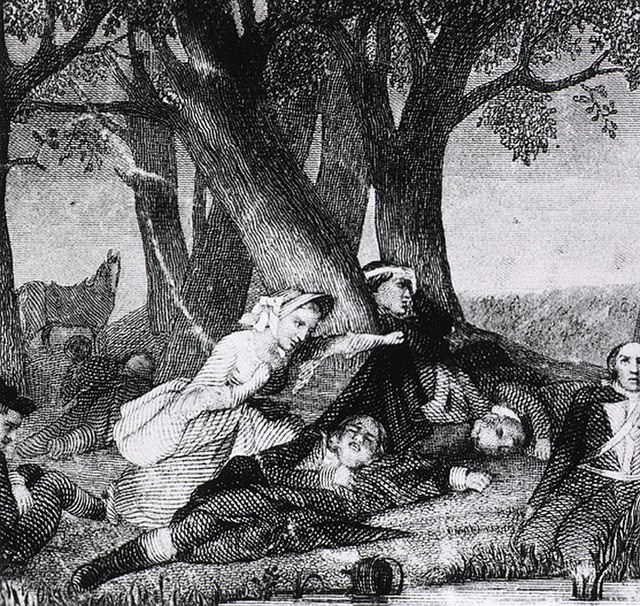
    I was born in New Jersey sometime before the Revolution and lived near what is now Hamilton Square. When war came to our land, I did not carry a musket or march with the army, but I served in a different way. I opened my home to prisoners of war—men who had been captured in battle, wounded, starving, and far from their families. I gave them shelter and I gave them care.

    Details of my life are scarce. I married a man named David Chambers, and we lived quietly, like so many others whose stories were never written in the books. But during the fight for independence, I did what I could to help the cause. I stood with the Patriots not on a battlefield, but around a hearth. My contribution was not glory, but comfort.

    Though I am not widely known, my name has survived. And like the many women who kept this country standing while the men went off to war, I played my part.

  • Quaker Women in Mercer County

    Quaker Women in Mercer County

    We were Quaker women living in what is now Mercer County, New Jersey, during the time of the American Revolution. Bound by our faith, we refused to take up arms or swear loyalty to either side, but that did not mean we stood idle.

    While battles broke out around us—from Trenton to Princeton—we stayed committed to peace, offering care to the wounded no matter their uniform. We opened our homes, dressed wounds, and shared food with those in need. In places like Stony Brook, we gathered at the Meeting House, holding on to our values even as war tested them.

    Some of us, like Margaret Hill Morris just downriver in Burlington, kept detailed records of what we saw. Others simply lived the truth in silence, serving community above conflict. We did not seek glory, but we held firm. And in doing so, we helped hold our towns together.

  • Susannah (Clarke Family Slave)

    Susannah (Clarke Family Slave)

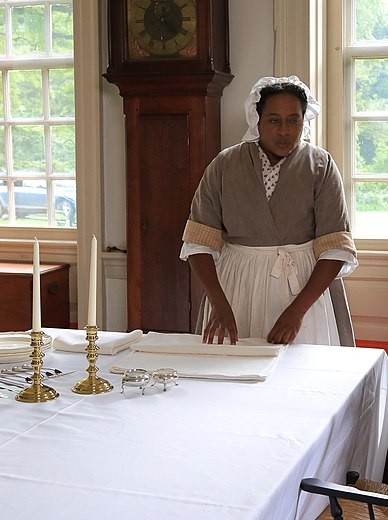
    I was the Clarke Family Slave and witnessed the Battle of Princeton. The battle that took place on the farms of my owners was something that we did not at all expect. My seven owners were all related and were Quakers; people who were pacifists and did not want to be involved in the war on either side. They were farmers who worked hard each day to produce food for their families and neighbors. We knew the British had troops stationed in Princeton on the morning of January 3, 1777, but had seen most of them march south the day before toward Trenton, where they had fought against General Washington’s troops. We had no idea how that battle had gone but, as always, put our efforts into doing the best we could with our farms that had suffered from pillage by the British troops at Princeton for over three weeks. We were missing animals and food supplies put up for the winter.

    At the house of two of my owners, siblings Thomas and Sarah Clarke, the morning farm chores were underway when all of a sudden men began marching towards Princeton in front of our farmhouse on an old, little-used road that led to the east side of Princeton. They were disheveled men belonging to General Washington’s army, not the red coat British or blue coat Hessians, and it seemed that there were several thousand of them. As we watched, a group of several hundred men broke off and headed across the neighboring farm of William Clarke towards the Post Road [also called the King’s Highway]. Unknown to us, at that moment most of the British troops remaining in Princeton were marching on that road towards Trenton to join General Cornwallis there.

    British soldiers on the road saw the American troops and sent some men to attack them. Very quickly, a battle took place on William’s and our farms, badly scaring us and causing some damage to our house. After the firing ceased, Washington’s troops carried some severely wounded and bleeding men into our house, and I helped Mistress Sarah Clarke along with other Quakers and army doctors take care of them for many days after the battle.

  • Women of Trenton

    Women of Trenton

    We were the women of Trenton, born into a time of unrest and revolution. While the men marched to war, we stayed behind to hold the town together. We cooked, we nursed the wounded, and we kept our families safe as battles raged just beyond our doors. Some of us passed messages in secret, carrying news and plans between Patriot camps. Others opened our homes to soldiers in need of shelter and care. When food was scarce, we shared what little we had. When hope ran thin, we held the line.

    We did not wear uniforms or carry muskets, but we fought in our own way. Our strength was quiet, our courage constant. We were not named in the histories, but without us, the fight could not have lasted. We were mothers, daughters, neighbors, and patriots. And in the heart of Trenton, we stood strong.

  • Hannah Arnett

    Hannah Arnett

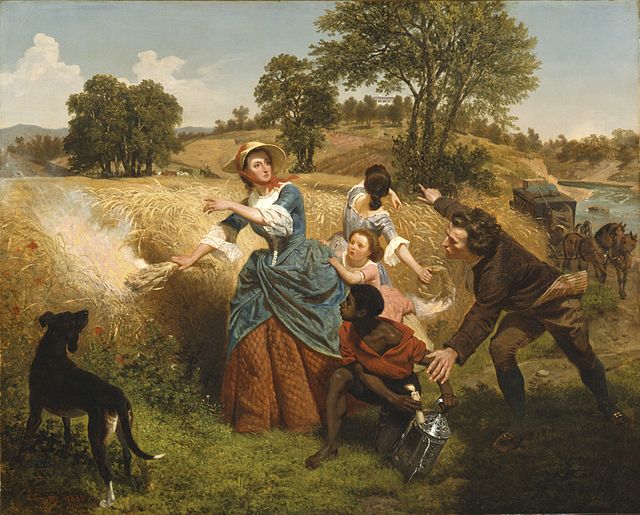
    I was born in 1733 and lived in Elizabeth, New Jersey, during the most uncertain days of the American Revolution. I was a Quaker woman, raised with quiet strength and firm convictions, and I never imagined the fate of my town would rest on my voice. But in December of 1776, as British forces swept across New Jersey and defeat hung heavy in the air, I made my stand.

    That winter, the British offered amnesty to any colonists who would swear allegiance to the Crown. The offer was tempting. In Elizabeth, my husband and a group of town leaders gathered in our home to discuss it. They were men torn between survival and loyalty, men who had tasted loss and feared what might come next. I listened from the next room as they considered swearing allegiance to King George in exchange for the protection of their lives and property. I could not stay silent. I walked into the room and called them cowards to their faces. I told them liberty was worth more than comfort. I told my husband that if he gave in, I would leave him.

    For a woman to defy her husband was rare. For a Quaker woman to threaten separation, risking expulsion from her meeting and community, was almost unthinkable. But I would not be silenced. And I would not stand by while the men around me gave up the cause. The men did not take the oath. The town did not fall back into the arms of the British. And though my story wasn’t widely told until after my death, it lived on.

    In 1890, when women were denied entry to the Sons of the American Revolution, my name helped build something new. My great-grandson stood with the founders of a new organization, one that would honor the women who fought in quieter ways. The Daughters of the American Revolution was formed, and my words helped light the way.

  • Margaret Hill Morris

    Margaret Hill Morris

    I was born near Annapolis, Maryland in 1737, the tenth child in the socially prominent and well-to-do Richard and Deborah Hill family. Financial difficulties forced my family to move to the Azores. I was then sent to live with my recently married sister in Philadelphia, who raised me to adulthood. I received a good education based on Quaker principles.

    I married Philadelphia dry goods merchant, William Morris, in 1758. He was committed to pacifist, anti-slavery and philanthropic causes, but died at the young age of 31. Now a widow with four young children, I moved to Burlington, New Jersey in 1770 to live with another sister and her family.

    Throughout my life, I gardened and during the Revolution my garden was divided between food for my family and plants I could use to make medicines. From about 1780 to 1782 I ran a small apothecary shop selling medicines I had prepared. I was respected as a competent doctress and helped provide health care through Quaker organizations. At one point, I ran a smallpox hospital with up to thirty patients.

    During the Revolution, I treated people on all sides impartially and kept a journal of my experiences. The month of December 1776 was especially troubling because of the recent American army defeats and the arrival of Hessian troops at Burlington. On December 8, I wrote, “every day begins & ends with the same accounts, & we hear today the Regulars are at Trenton – some of our neighbors gone, & others going … but our trust in Providence still firm, & we dare not even talk of removing our family.” On December 11, when some 4 or 500 Hessians arrived in Burlington, several men of our town went out to greet them and their Colonel was able to communicate that “he had orders to quarter his troops in Burlington that night, & that if the inhabitants were quiet & peaceable, & would furnish him with quarters & refreshment, he would pledge his honor, that no manner of disorder shoud happen to disturb or alarm the people.”

    However, there were armed Pennsylvania State Navy gondolas on the river that fired on the Hessians. We took safety in our cellar until it ceased. On December 12, although the Hessians had left, there were reports that men from the galleys were going to set fire to the town, thinking there were still Hessians hiding out. Finding the Hessians gone, the gondola men searched for those people who were Tories. My son brought great danger on us when he took my little spyglass and was seen by the gondola men looking at them through it. They thought he was a Tory spy. Explaining things to the officer accusing him and offering him the spyglass, put an end to the problem. This officer was soon after killed at the Battle of Princeton.

    I learned on December 27 about the surprise attack at Trenton the day before. Then, on the morning of January 3, “between 8 & 9 oClock we heard very distinctly, a heavy fireing of cannon, the sound came from towards Trenton, about noon a number of soldiers, upwards of a thousand came into town in great confusion, with baggage & some cannon. – From these soldiers we learn there was a smart engagement yesterday at Trenton, & that they left them engaged near Trenton Mill, but were not able to say which side was victorious.” These men quartered in our houses, but none with me. However, “about bed time I went in the next house to see if the fires were safe, & my heart was melted with compassion to see such a number of my fellow creatures lying like swine on the floor fast asleep, & many of them without even a blanket to cover them[.] it seems very strange to me that such a number should be allowed to come from the camp at the very time of the engagement, & I shrewdly suspect they have run away for they can give no account why they came, nor where they are to march next.”

    In 1784, I moved my family back to South Philadelphia. I assisted during a yellow fever epidemic in 1793, during which my son, Doctor John Morris and his wife became victims of the disease. My own children were now adults, but I inherited five orphaned grandchildren between the ages of one and nine. Another yellow fever epidemic brought death to several other of my siblings and their spouses. To be nearer to my surviving family I returned to Burlington in August 1799. For the rest of my life I helped the younger members of my family and they cared for me as I aged. I died October 10, 1816 at age 79 after a long decline that partially paralyzed me, but did not prevent me from writing upbeat accounts to my relatives.

  • Sarah Clarke

    Sarah Clarke

    I was born into the Clarke family of Princeton, New Jersey, Quaker settlers whose roots in the area stretched back three generations. Our family farm sat along the edge of the Stony Brook, quiet and unassuming, until the morning of January 3, 1777, when the war for independence came crashing through our fields. That day, the Battle of Princeton unfolded right outside our door.

    Our home, later known as the Thomas Clarke House, stood directly in the path of the fighting. As musket fire rang out and soldiers fell, our house was turned into a makeshift field hospital. Wounded men from both the American and British armies were carried through our doorway. We worked quickly, stripping beds for bandages, boiling water, and doing whatever we could to ease their pain. Among them was General Hugh Mercer, a commander in General Washington’s army, who had been bayoneted and left for dead. We helped care for him, though his wounds were too great. He held on for nine days in our home before he passed.

    We were not soldiers, but we served. We gave what shelter we had, and offered care to those in need, no matter the uniform they wore. Our home survived the battle, and so did our story. Today, the Clarke House still stands in Princeton Battlefield State Park. It tells the story of that cold January morning, of the wounded who were carried inside, and of the family who tried to save them.

  • Mary Ludwig Hays McCauley (Molly Pitcher)

    Mary Ludwig Hays McCauley (Molly Pitcher)

    I was born around 1754, the daughter of a dairy farmer in New Jersey. When I was thirteen, I left home to work as a servant, and not long after, I married William Hays, a barber from Pennsylvania. When the Revolution began, William joined the Pennsylvania Artillery, and I followed him into camp as part of the army’s support. We marched through the Philadelphia Campaign and endured the long, freezing winter at Valley Forge together.

    By the summer of 1778, we were with the Continental Army at the Battle of Monmouth. The sun was punishing that day, and I was carrying water to the soldiers when my husband collapsed beside his cannon. I put down the pitcher and stepped up to help the artillery crew. I loaded cannon fire through the battle, standing in the thick of it. At one point, a cannonball tore through the hem of my skirt. I looked down and said it was lucky it didn’t go any higher, then kept working.

    Some said General Washington saw what I did and gave me a commendation. After that, they called me “Sergeant Molly,” though no official record of that moment has ever been found. Still, my name—Molly Pitcher—became part of the legend.

    When the war ended, William and I settled in Carlisle, Pennsylvania. I worked as a domestic and a charwoman at the State House. William died in 1786, and in 1793 I married another veteran, John McCauley. I never sought out recognition, but in 1822 the Pennsylvania legislature awarded me a pension for my wartime service.

    I died in Carlisle on January 22, 1832. It wasn’t until the 100th anniversary of the Revolution that a marker was placed on my grave. Some still debate whether my story was mine alone or a blend of many women’s efforts. But I stood on that battlefield, and I did my part. I may not have worn a uniform, but I fought just the same.

  • David Brearley

    David Brearley

    I was born in 1745 at Spring Grove Farm in Maidenhead (today’s Lawrence Township) into a family that migrated to New Jersey about 1680 and was originally from Yorkshire, England. I chose to pursue law as my career and, after reading law with a lawyer in Princeton, I set up my practice at Allentown, New Jersey about 1767, about the time I married Elizabeth Mullen.

    In late 1775, my brother Joseph was commissioned a captain in the Second New Jersey Continental Regiment and experienced the terrible fighting in Canada. Joseph wrote me several very descriptive letters about his experiences. He wrote me from Montreal on March 7 describing his dreadful march from New Jersey and my reply to him in May told him those hardships were, “what your friends dreaded before you went, tho we did not choose to discourage so necessary & laudable an undertaking.” I also told him that at home things were “tolerable quiet” although our militia had to keep a constant guard at Sandy Hook to prevent marines landing from British ships that sailed down from New York harbor to avoid the artillery Washington had placed on Manhattan Island.

    I was active in the protests that led to the Declaration of Independence and when a brigade of militia was raised in June 1776 to serve on full-time active duty for five months, I was lieutenant colonel of Colonel Philip Van Cortland’s regiment. During those five months, I fought in the series of battles that failed to prevent British General Howe from establishing his headquarters at New York. Then, I marched on Washington’s retreat through New Jersey until the five-months expired on November 30 and I returned to Allentown on December 1.  Joseph returned from Canada about the same time and he had had enough of life in the Continental Army, so he returned to his duties in the First Hunterdon County militia regiment.

    Just before my five-month militia commission expired, I was commissioned as lieutenant colonel for the Fourth New Jersey Continental regiment, just then being formed, but then switched to the First New Jersey Regiment on January 1, 1777. That December and early January, when New Jersey was in chaos due to the British occupation, I served as an individual with Washington’s troops as they fought back against the British and Hessians occupying New Jersey and made them retreat to winter quarters at New Brunswick and Perth Amboy, while Washington’s troops wintered at Morristown. I joined the First New Jersey Regiment there and served through the Philadelphia campaign in 1777, Valley Forge in the winter of 1778, and then the Battle of Monmouth in June 1778. In March 1780, I reluctantly resigned my commission, because I had been chosen Chief Justice of the New Jersey Supreme Court by the legislature. I presided over the case of Holmes v. Walton and in overturning the conviction of John Holmes for trading with the enemy, I supported the concept of Judicial Review by overturning a law passed by the Assembly as unconstitutional, the principle supported by Justice John Marshall in the famous case of Marbury vs Madison in 1803.  The College of New Jersey presented me with an honorary M.A. degree in 1781, but I was saddened in 1783, when Elizabeth died. I married Elizabeth Higbee as my second wife.

    In 1787, I participated in the convention at Philadelphia that wrote the United States Constitution. I strongly supported my friend William Paterson and his New Jersey Plan, proposing one vote for each state in the new congress, rather than proportional representation based on population. A compromised followed, but on August 31, it seemed like the convention might fail over the issue of ratification. That issue was resolved, but there was still much to do, so a Committee on Postponed Matters was created with one member from each state. As New Jersey’s member, the other members chose me to be the chairman. We had a host of issues to deal with, including how to elect a president. When the reports of my committee were debated in the convention, I followed the example of George Washington and kept out of divisive debate. I culminated my role at the convention by signing the U.S. Constitution as a delegate from the State of New Jersey.

    When the Constitution was submitted to the states, I presided over the New Jersey ratification convention in 1788. Then, in the first presidential election, I was one of the electors who unanimously voted for George Washington. Washington appointed me the first federal district judge in New Jersey and I served in that office until my death, soon after, in 1790. I died in Trenton, after suffering with a long illness that I continued to work through, at the young age of 45 and was buried in the cemetery of St. Michael’s Episcopal Church.

    When not involved in public service, I was very active in the Episcopal Church, including helping to write the church’s prayer book, and was the first Grand Master of the New Jersey Masonic Lodge. I also served as vice-president of the Society of the Cincinnati, the organization of former Continental Line officers during the Revolution.

  • John Hart

    John Hart

    I was born in Hopewell, New Jersey, likely in the year 1711, though nobody wrote it down for sure. My father, Edward Hart, came to Hopewell around 1710 and helped shape the town, serving as a Justice of the Peace, a farmer, and a man trusted in the community. My family never had much formal education, and I wasn’t any different. I learned to read, write, and handle numbers well enough to manage land and public affairs, though my spelling could be rough. What I lacked in schoolbooks, I made up for in common sense, character, and grit.

    I married Deborah Scudder in 1739 after courting her on long horseback rides from Hopewell to Scudder Falls. Together, we raised 13 children on our farm. Over time, I became the largest landowner in Hopewell, working over 600 acres with livestock, mills, and business ventures that kept our family afloat.

    Starting in 1750, I was elected to the Board of Chosen Freeholders, then Justice of the Peace in 1755. From there, I served in the Colonial Assembly for a decade, then sat on the Court of Common Pleas, and by 1774 I was deep in the fight for liberty, helping appoint delegates to the First Continental Congress and protesting the Tea Act. When the revolution began, I was ready.

    In June 1776, I rode to Philadelphia to take my seat in the Second Continental Congress. I was 65 years old but when they called for men to sign the Declaration of Independence, I didn’t hesitate. I was the 13th man to sign. I pledged my life, my fortune, and my sacred honor to the cause, even knowing what it might cost.

    That cost came quickly. My wife, Deborah, died in October 1776 while I was away at Congress. Two months later, I was forced to flee my home as the British raided New Jersey. I spent weeks hiding in the woods and caves of the Sourlands, living like a fugitive in the land I’d helped to defend. When the tide turned after Trenton and Princeton, I came back home. I was reelected Speaker of the New Jersey Assembly and continued to serve until 1778. In June of that year, General Washington and the Continental Army camped on my land, twelve thousand men drinking from my spring and preparing for the Battle of Monmouth.

    But I wouldn’t live to see America win her freedom. In 1779, I died at home of kidney stones after months of suffering. I was 66 years old. Today, my grave rests on land I once donated to the Baptists back in 1747. My name’s etched in stone, and a bronze plaque honors both me and Deborah.

  • Richard Stockton

    Richard Stockton

    I was born in Princeton, New Jersey, on October 1, 1730, into a family rooted deep in the soil of the colonies. My father, Judge John Stockton, was one of the founders of the College of New Jersey, what you now call Princeton University. Our family home, Morven, stood as a symbol of commitment to learning, liberty, and service. I followed that path, studying under Reverend Samuel Finley before graduating from the College in 1748. I went on to study law under the renowned David Ogden and soon became one of the most respected legal minds in the colonies.

    I built a thriving practice, earned the title of Sergeant-at-Law—the highest rank attainable—and traveled to London in 1766, where I met with the King himself and delivered a speech celebrating the repeal of the Stamp Act. I dined with members of Parliament, stayed with nobles, and spoke boldly in defense of the colonies. I carried with me not only arguments, but conviction. During that trip, I persuaded Reverend John Witherspoon to come to America and lead our young college, ten years before we would stand together and sign the Declaration of Independence.

    By the time the Revolution loomed, I had served on the royal council and the New Jersey Supreme Court. I tried everything to avoid war, drafted compromises, warned the Crown, but when the time came to choose between king or country, I chose liberty. I took my seat in the Continental Congress in June 1776, arriving in Philadelphia soaked from a thunderstorm, just as John Adams was finishing a fiery speech for independence. I asked him to repeat it. He did. And by the end of the debate, I gave my full support. On July 4, I signed the Declaration of Independence, pledging my life, fortune, and sacred honor.

    And I paid for it. That November, the British marched into New Jersey. I sent my family to safety, but I was captured and dragged from bed in the middle of the night, marched half-dressed through freezing cold, and thrown into a prison in New York City known for death and despair. There I was starved, shackled in irons, and nearly frozen to death.

    General Washington himself protested my treatment. General Howe finally released me on parole, too weak to continue the fight. I came home to find Morven plundered, my library burned, my possessions gone. British troops had even slept in my bed. I resigned from Congress and tried to recover my health, but it never returned fully. I died on February 28, 1781, five years after signing the Declaration, and months before the war was won.

    Today, Morven stands as a museum to New Jersey’s past. A statue of me rests in Statuary Hall at the U.S. Capitol. A rest stop bears my name, and a college once did, too.