
Person: Unnamed & Free Black Residents

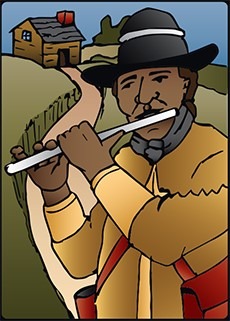
  • William Stives

    William Stives

    I was a free Black person who fought for everyone’s freedom in the Revolution.

    I enlisted for the duration of the war as a fifer in the 3rd New Jersey Regiment. I endured the terrible winter of ’77-’78 at the Valley Forge encampment. When summer came, we crossed the Delaware River and camped out in northeastern Hopewell Township, NJ for several days. I decided that one day I would try to make my home there. On June 28, we fought the British all day, in horrendous heat, at the great battle at Monmouth.

    In the summer of 1779, my regiment participated in a campaign led by General John Sullivan against the Iroquois Indians, primarily in New York State. That winter we lived in log huts at Jockey Hollow at another frigid encampment outside Morristown, and that spring I fought in the Battle of Springfield. In 1781, I participated in the victory at Yorktown.

    After my service, I married Catherine Vanois in 1789 and together we raised ten children. In 1791 I achieved my dream of owning a home when I purchased farmland in the Sourland Mountains of Amwell Township, Hunterdon County.

    I lived a long life and died at 82 on August 24, 1839. I’m proud that my obituary states that my “deportment in private life was well worthy of imitation, both as a man and a Christian.”

  • Prime

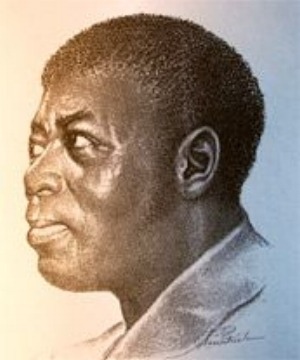
    Prime

    I was born in Africa and taken from my homeland as a child. I arrived in Princeton, New Jersey, enslaved and brought into the household of Dr. Absalom Bainbridge, a respected physician who would later declare loyalty to the British crown. I was known as Prime. I lived and labored in the Bainbridge House on Nassau Street, tending to my master’s needs while the country around us moved toward revolution.

    When the war began, Bainbridge fled Princeton and joined the British army as a surgeon. I was left behind, handed off to relatives, moved from house to house. I ran away in 1778, escaping back to Princeton, where I hoped to live free. But freedom was not simple. I was captured and nearly sold again, until a man named Jacob Bergen, troubled by the idea of liberty being won while I was still being treated like property, urged me to join the Continental Army. I became a waggoner, serving in the American forces, hoping my work would earn my freedom.

    After the war, I lived in Trenton, thinking myself free. But in 1784, I was seized and re-enslaved by a man who claimed to have bought me years before. A court case followed, dragging on for two years. The jury ruled in my favor. Still, I was not free. I now belonged to the state of New Jersey.

    So I petitioned the legislature. I told them I had served their cause. That I had earned my liberty. That no man should live in bondage after fighting for freedom. On November 21, 1786, they agreed. They passed an act to set me free. I became one of only three enslaved men in New Jersey granted freedom by legislative decree for service in the Revolution.

    After that, I disappear from the records. My name—common as it was—makes me hard to trace. But my fight, my service, and my petition live on. I was Prime. And I carved my name into the story of American freedom, even when others tried to erase it.

  • Oliver Cromwell

    Oliver Cromwell

    I was a free black man who proudly served my new country.

    My origins are a little mysterious, I was born in the village of Black Horse in Burlington County, and some believe I was a mulatto – with white and black parents – while others think I may have been Indian. I was probably a mix of European, African, and Native American.

    I was a free farmer, but in February 1777 I enlisted in the Second New Jersey Continental Regiment for the duration of the war. Recruits of color like me were not always welcomed in the army, but I was allowed to enlist and proud to serve. And my service was impressive. I fought at the battles of Short Hills, Monmouth, Brandywine, Springfield and the great victory at Yorktown. When I was discharged in June 1783, my six faithful years of service earned me the “Badge of Merit.”

    But my story doesn’t end there. In 1818, the United States Congress passed a law to provide pensions to former Continental soldiers in need. I applied in 1818 and again in 1820, and was awarded a pension of $96 a month.

    I loved to tell stories about the Revolution to anyone who would listen. In 1850, I told a census taker that I was 97 years old and that my occupation had been “drummer in the Revolution.” I died shortly thereafter, in 1853, about 100 years old, and I was buried in the cemetery of Broad Street Methodist Church in Burlington.