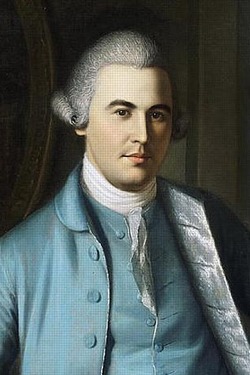
Person: Military Leaders and Officers

  • Lambert Cadwalader

    Lambert Cadwalader

    I was born in Trenton in 1742, the son of a wealthy merchant. I went to the College of Philadelphia, but never finished—I had other plans. Commerce came first. My brother and I ran a successful business in the city, but my heart was already shifting toward the fight for liberty. By the time tensions with Britain reached a boil, I was standing shoulder to shoulder with the Sons of Liberty.

    In 1774, I was chosen to represent Pennsylvania at the First Continental Congress. I spoke out against the abuses of the Crown. But talk alone wasn’t enough. When war erupted, I took up arms and accepted a commission as a captain in the Continental Army. I joined the defense of New York and found myself stationed at Fort Washington in the fall of 1776. The British struck hard that November, and our defenses crumbled. I was captured in the chaos, taken prisoner by the British, and held under parole. That meant I could return home, but only under the condition that I would not take up arms again unless exchanged. I honored that promise and my war days were over.

    Still, I did not disappear. I returned to politics, where the battle for the future of the country continued. I served in the Confederation Congress in the final years of the war, then again under the new Constitution as a U.S. Representative from Pennsylvania. I stood in the halls where laws were shaped and helped lay the groundwork for what the nation would become.

    I lived a long life and died in Trenton in 1823. I was not a martyr. I was not a general. But I was there when it mattered—at the dawn of a revolution, and again in the quiet work that followed.
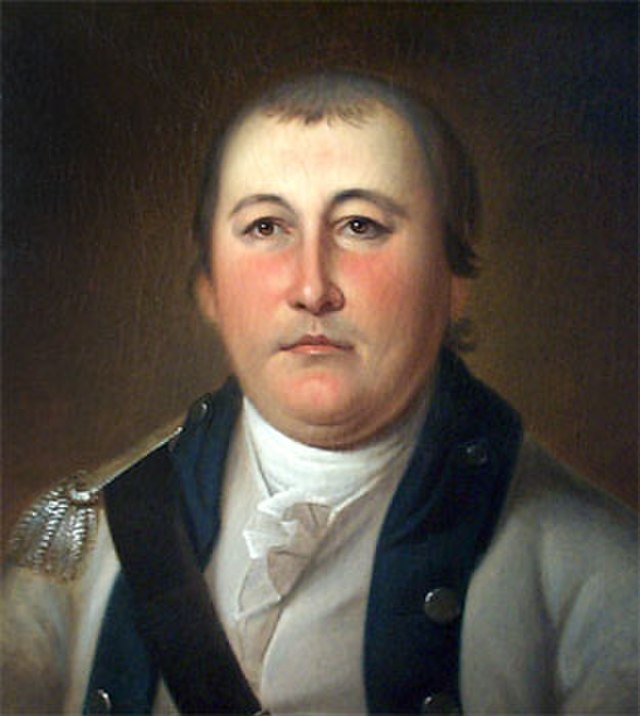
  • William Washington

    William Washington

    I was born on February 28, 1752, in Stafford County, Virginia, a distant cousin of George Washington. When the call to arms rang out at the start of the American Revolution, I was elected Captain of the Stafford County Minutemen. My unit soon joined the Third Virginia Regiment and headed north to fight.

    At the Battle of Trenton on December 26, 1776, I led a charge against Hessian artillery and was wounded in the action. For my bravery, I was promoted to Major and placed in command of cavalry under the newly formed Fourth Regiment of Continental Light Dragoons. By 1779, I had risen to Lieutenant Colonel, leading the Third Regiment of Light Dragoons into battle across the Carolinas. In South Carolina, I helped capture Rugeley’s Fort and defeated Loyalists at Hammond’s Old Store. But it was at the Battle of Cowpens on January 17, 1781, where I made my name. There, I led a bold cavalry charge that helped rout the British forces. For my actions, Congress awarded me a silver medal, one of only eleven given during the war.

    Later that year, I fought at Guilford Courthouse, Hobkirk Hill, and Eutaw Springs, where I was wounded and captured. I spent the rest of the war as a prisoner in Charleston. After the fighting ended, I remained in South Carolina, married Jane Reily Elliott, and took up life as a planter at Sandy Hill. I served in the South Carolina legislature, commanded the state militia, and was appointed Brigadier General during tensions with France in 1798. I stayed active in public life until illness overtook me. I died on March 16, 1810, remembered as one of the finest cavalry officers of the Revolution. Lord Cornwallis himself once said there was no more formidable man to face in battle than Colonel William Washington.

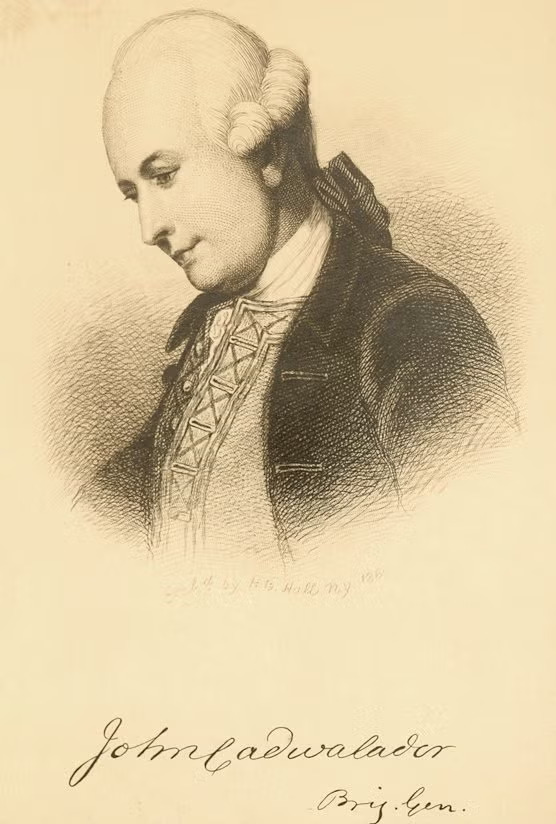
  • John Cadwalader

    John Cadwalader

    I was a merchant, a soldier, and a trusted ally of General George Washington.

    I was born in 1742 in Trenton, New Jersey, and raised in a prosperous family connected to both Philadelphia and Europe. After studying overseas and at the College of Philadelphia, I went into business with my brother Lambert, and together we built a successful merchant enterprise. In 1768, I married Elizabeth Lloyd of Maryland, and a year later, her father introduced me to George Washington — a meeting that began a lifelong bond. Elizabeth and I had three daughters before her passing in 1776, and later, I remarried Williamina Bond and raised three more children.

    As a merchant, I had seen firsthand how unfair British taxation was to the colonies. In 1774, I organized a well-dressed Philadelphia militia known as the “Silk Stocking Company,” and in 1775, I became colonel of the Third Battalion of that militia.

    During the critical winter of 1776, Washington asked me to hold my men in Trenton, New Jersey, instead of pushing ahead to Princeton. He tasked me with organizing our forces and determining if newly arrived sailors from Philadelphia could serve as foot soldiers. I attempted to cross the Delaware River alongside Washington for the Battle of Trenton, but icy waters and harsh winter weather prevented my artillery from reaching the field in time.

    A week later, I redeemed myself at the Battle of Princeton. From my position in New Jersey, I gathered intelligence on British troop locations and resources, and I passed a detailed map to Washington. I then led the Philadelphia militia into battle, and the map I created helped secure another critical victory for the Continental Army.

    In 1777, Congress offered me the title of brigadier general in the Continental Army. Though I respectfully declined, Washington continued to treat me as one of his most trusted officers, sending me orders and seeking my counsel. I later accepted the rank of brigadier general in the Philadelphia militia, and continued to support the war effort through both action and strategy.

    After retiring from the military, I served three terms in the Maryland House of Delegates. I died young, in 1786, at the age of forty-four. Though my life was short, I lived it with honor and conviction. Even those who disagreed with my politics remembered me as a man of integrity, a patriot whose heart never wavered from the cause of liberty.

  • John Glover

    John Glover

    I was a sailor, a soldier, and the man who rowed Washington to victory.

    I was born on November 5, 1732, in Salem, Massachusetts. When my father died, I was just four years old. My mother moved our family to Marblehead, where I grew up among fishermen, dockworkers, and sailors. The sea shaped my life. I became a fisherman, then a merchant, eventually owning my own ship and building a successful business. That success gave me influence, and when tensions with Britain rose, I stood with the Whigs. In 1775, I took command of the Marblehead militia.

    When war broke out, we marched to Boston to support the siege. General Washington soon chartered my ship, the Hannah, to raid British vessels — one of the first ships in what would become the Continental Navy. But it was my men, the Marblehead Regiment, that would make the biggest difference. Fishermen, sailors, mariners of all backgrounds: Native, Black, Spanish, Jewish. We were known as the “amphibious regiment,” bred to the sea and ready to row, march, or fight.

    At the Battle of Long Island, our regiment saved the entire Continental Army. Under the cover of darkness, we ferried Washington’s troops across the East River, escaping British encirclement. Had we failed, the Revolution may have ended then and there.

    Then came our most famous mission — Christmas night, 1776. We rowed Washington and his army across the icy Delaware River to surprise the Hessians at Trenton. That victory reignited the Revolution. It was the last major campaign for my regiment, but my service didn’t end there.

    After tending to my wife and business back home, I rejoined the army in 1777 at Washington’s personal request. I fought in the Saratoga campaign, helped oversee British prisoners, and later joined Washington at Valley Forge. I spent the rest of the war at West Point, building up its defenses and briefly taking part in the Battle of Rhode Island.

    After the war, I retired to Marblehead. I stayed active in public life, serving as a town selectman, a delegate at the Massachusetts convention to ratify the U.S. Constitution, and a member of the state legislature. I passed away on January 30, 1797. To this day, reenactors still march in my name as Glover’s Regiment, remembering the rower, the general, and the man from Marblehead who helped carry a nation forward.

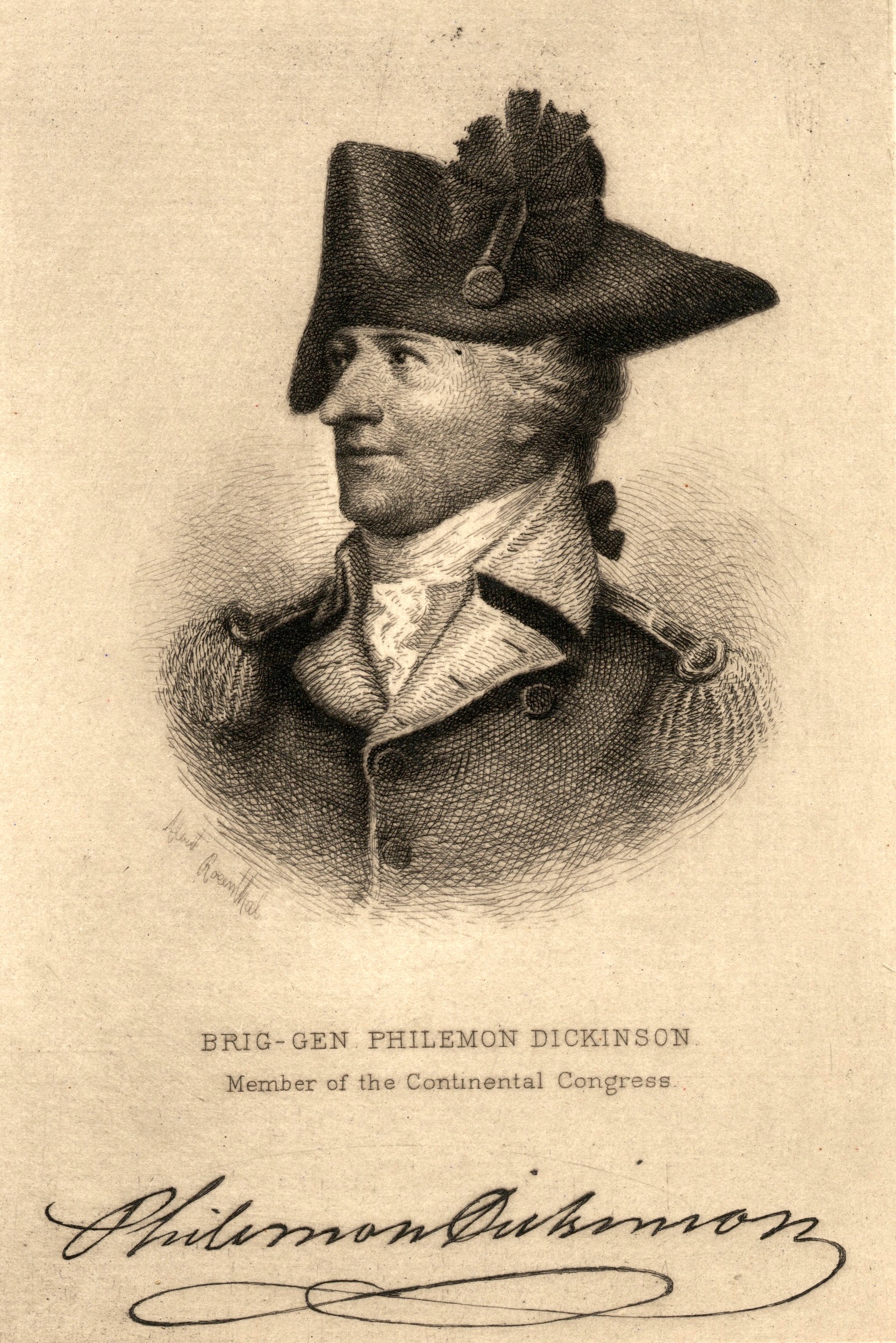
  • Philemon Dickinson

    Philemon Dickinson

    I was a leader of the Militia, and a representative in the Legislature.

    I was born in Delaware in 1739 on my father’s plantation. I graduated from the College of Philadelphia in 1754, studied law with my brother John in Philadelphia, married Mary Cadwalader in 1767 and became the owner of an estate on the banks of the Delaware a mile north of Trenton.

    When the Revolution broke out I was commissioned a brigadier general of the militia, on October 19, 1775. In 1776, I represented Hunterdon County in the Provincial Congress of New Jersey and helped draw up New Jersey’s Constitution, which was adopted two days before the Continental Congress adopted the Declaration of Independence.

    During the summer and fall of 1776, my troops guarded New Jersey against the British making forays from Staten Island and New York City. In November and December, we retreated with Washington’s army south across New Jersey, crossed the Delaware into Pennsylvania, and I established my headquarters at Yardley. Our part of the river was completely frozen with ice, so we could not get across to take part in the Battle of Trenton.

    After the British returned to New York in 1777, many of my militiamen were assigned to man posts opposite Staten Island. We were praised for our fighting in the battles of Monmouth, Connecticut Farms, and Springfield.

    In 1784 after the war, I wrote a report recommending that Trenton be the capital of our new nation. I stayed active in civic and financial affairs until my death on February 4, 1809, at the age of 70.

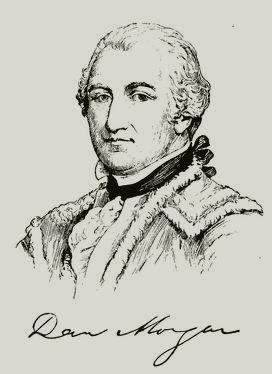
  • Daniel Morgan

    Daniel Morgan

    I was a rough and rowdy frontiersman who turned into one of the fiercest battlefield commanders of the American Revolution.

    I was born in 1736, likely in Hunterdon County, New Jersey, to Welsh parents, but I left home as a teenager after a falling out with my father. I headed south to Virginia, where I worked my way up from laborer to wagoner, hauling supplies over the mountains. I didn’t have much education, but I had grit, and I earned the nickname “Old Wagoner” during the French and Indian War.

    Later in the war, I was ambushed delivering dispatches, shot through the jaw, and left for dead. But I survived, married Abigail Bailey, and built a family and a home in Winchester, Virginia.

    When the Revolution broke out, I raised a rifle company and joined the cause. I was captured in the assault on Quebec and spent time as a prisoner, but once exchanged, I returned to the fight. My men were known as “Morgan’s Riflemen”. They used advanced movements such as having army units backed by local militia, the Continental Amry started using this strategy regularly. Though it has not been confirmed if I was present at The Battle of Princeton, my men’s actions helped secure a Patriot victory. I also played key roles at Saratoga, even though I didn’t always get the credit. After briefly stepping away from the army, I came back in 1780 to help turn the tide in the South.

    At the Battle of Cowpens on January 17, 1781, I orchestrated one of the most brilliant victories of the war. Knowing my men and knowing my enemy, I used militia, Continental troops, and cavalry in perfect coordination. We crushed the British forces under Tarleton, and that win helped swing momentum back to the Revolution.

    I retired not long after due to painful sciatica, but I stayed active—serving in Congress and even leading troops during the Whiskey Rebellion. I passed away on July 6, 1802, remembered not just for my victories, but for my courage, leadership, and rise from humble beginnings.

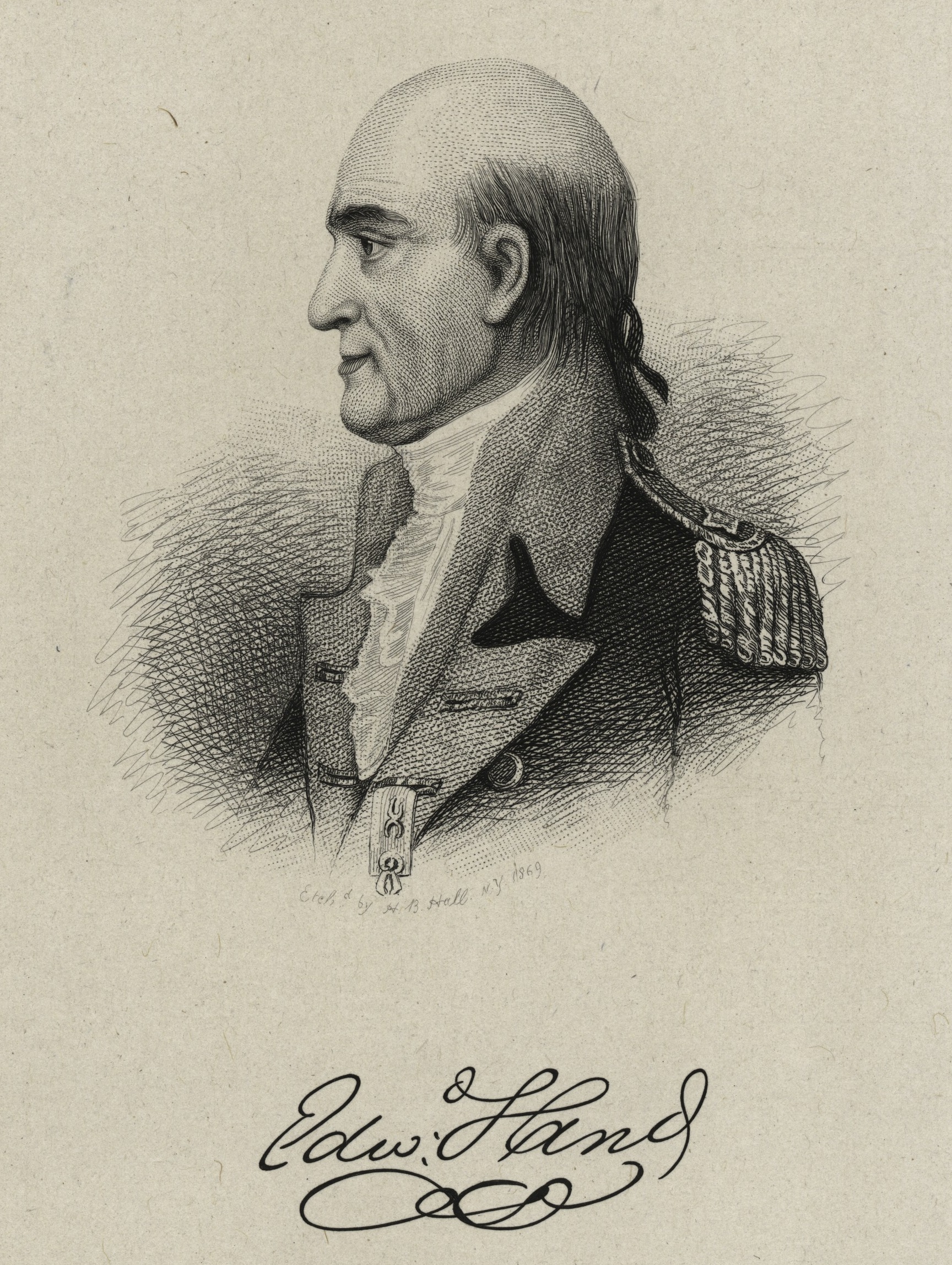
  • Edward Hand

    Edward Hand

    I was a doctor turned general, an Irish-born Patriot who fought from the wilderness to Yorktown.

    I was born in 1744 in Clyduff, King’s County, Ireland. I studied medicine at Trinity College in Dublin and joined the British Army as a surgeon’s mate in the 18th Royal Irish Regiment of Foot. That post brought me to the American colonies, where I served at Fort Pitt — deep in the rugged frontier of western Pennsylvania. But in 1774, I left the king’s army behind and settled in Lancaster to practice medicine.

    When the Revolution broke out, I traded my scalpel for a rifle. I joined the Continental Army and was named a colonel of a Pennsylvania rifle battalion. In 1776, during the New York campaign, I led a small force that stalled a British advance at Throg’s Neck. Just twenty-five of us held back over 4,000 British troops. That delay gave Washington’s army time to reach stronger ground and may well have saved it from collapse.

    I rose quickly. Promoted to brigadier general, I returned to the Ohio frontier and took command at Fort Pitt. There, the war looked different — a brutal mix of Loyalist raids and Native resistance. In 1778, I ordered an attack on a Lenape village, believing them to be allied with the British. They weren’t. The attack drove neutral tribes into the fight and complicated the conflict in the west. It was a mistake I carried with me.

    In 1781, I was called back east to serve as adjutant general of the Continental Army under Washington. I organized logistics, handled wounded soldiers, and kept the army supplied during the siege at Yorktown. When the war ended, I was promoted to brevet major general and left military service in 1783.

    After the war, I returned to Lancaster and served in Congress and as a trustee of the University of Pennsylvania. I lived out the rest of my days quietly and died on September 4, 1802.

    Though I trained to heal, war made me a fighter. From Pennsylvania’s woods to Virginia’s victory, I stood with the cause until the final battle was won.

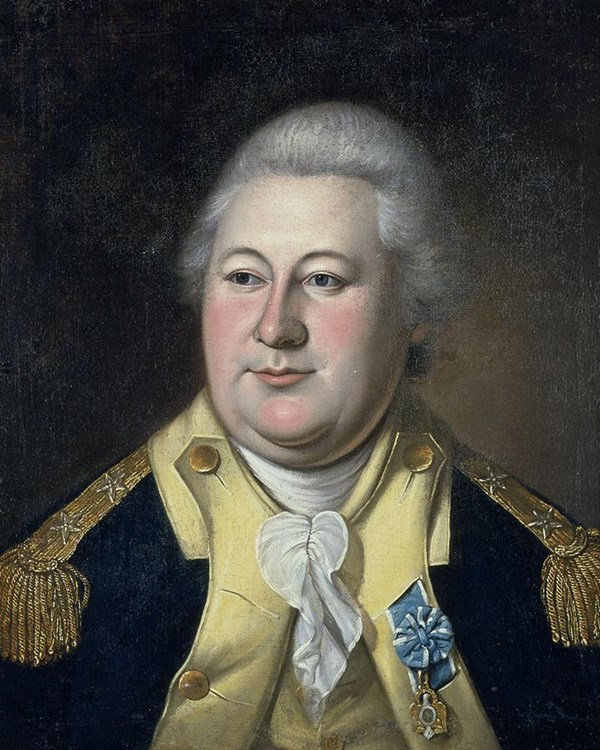
  • Henry Knox

    Henry Knox

    I was a bookseller turned general, and I moved mountains for the cause of liberty.

    I was born on July 25, 1750, in Boston, the seventh of ten children. My parents had come from Northern Ireland, and after my father passed away, I left school to help support my family. I found work in a Boston bookstore, where I read every military history and artillery manual I could get my hands on. Eventually, I opened a bookshop of my own. While I never trained as a soldier, I studied war like a professional.

    In 1774, I married Lucy Flucker. Her family remained loyal to the British, but I stood with the colonies. When the Revolution began, I joined the Boston Grenadier Corps and fought at the Siege of Boston. That’s where I caught the attention of General George Washington. Impressed by my understanding of artillery, he gave me a commission and soon tasked me with retrieving cannons from Fort Ticonderoga.

    It was winter. My men and I hauled more than sixty tons of cannon across 300 miles of frozen terrain using sleds and oxen. We brought every last piece to Boston without a single loss. Once those guns were in place on Dorchester Heights, the British fled the city. That was just the beginning.

    I directed artillery during the battles of Trenton and Princeton, and Washington promoted me to brigadier general. I remained his top artillery officer for the rest of the war. I fought in the Philadelphia Campaign, helped convict the spy John André, and led the artillery at Yorktown during the final siege.

    In 1782, I became the army’s youngest major general. When the British left New York City in 1783, I led the American forces into the city and stood beside Washington as he gave his farewell address at Fraunces Tavern. I was the first officer to step forward and embrace him.

    After the war, I became the first Secretary of War for the United States. I served in that role until 1794, helping shape the foundations of the American military.

    I passed away in 1806 after an infection caused by a chicken bone. My final years were spent in Thomaston, Maine, where I was buried with full military honors. Though my path began in a bookshop, I gave my life to the fight for freedom and helped turn a young army into a lasting force.

  • John Sullivan

    John Sullivan

    I was a general, a statesman, and a man of contradictions.

    I was born on February 17, 1740, the son of Irish immigrants from the O’Sullivan Beare Clan. Little is known about my early years, but I came up tough in New Hampshire and became a practicing attorney in the town of Durham. I made enemies quick, suing neighbors and foreclosing on debts. Some even petitioned the General Court to get relief from my demands. I fought back and won. The petition was dropped, and I sued the prosecutors for slander.

    I married Lydia Remick Worster of Kittery, Maine, in 1760. We had six children together, though two died very young. My son George would go on to serve as a U.S. Representative. At one point, I was close friends with New Hampshire’s Royal Governor, John Wentworth. But as tensions with Britain rose, so did my ambition. I sided with the Patriots, ending our friendship for good.

    I had once been appointed a major in the local militia by that same governor. In 1774, I was sent to the First Continental Congress and signed the Continental Association. A year later, I was a brigadier general in the Continental Army, fighting at the Siege of Boston. By early 1776, I was in Canada taking command of retreating Patriot forces after General John Thomas died of smallpox. That same year, I was promoted to major general and then captured after the British victory at the Battle of Long Island.

    I was held prisoner for three months, released in December by exchange, and quickly returned to duty. I joined Washington in New Jersey and crossed the Delaware on Christmas night, leading my men to block the Assunpink Creek bridge and trap Hessian forces trying to escape Trenton. That victory helped change the course of the war.

    But 1777 wasn’t kind to me. I clashed with Congress, was passed over for promotions, and took blame for our loss at the Battle of Brandywine. Still, I kept pushing forward.

    In 1779, I led what became my most infamous campaign: the Sullivan Expedition. With orders from General Washington, I commanded a scorched-earth march into Iroquois territory, joined by General James Clinton. Our goal was to cripple British-allied forces in the region. We destroyed more than 40 villages, burned crops, and dismantled winter stores across the Finger Lakes. The only major battle came at Newtown, where 3,200 of our troops defeated a smaller force of Iroquois and Loyalists. After that, we returned to camp. The aftermath was brutal. Thousands of Iroquois civilians were left to suffer the winter with no food or shelter. Many died from starvation or exposure.

    By October, I was in poor health and stepped away from military service. But I wasn’t done. I served in the Continental Congress, became attorney general of New Hampshire, was elected governor multiple times, and later became a federal judge under the new Constitution.

    I died at home in Durham on January 23, 1795.

    Some remember me as a bold general and dedicated public servant. Others look at the Sullivan Expedition and see something far darker. Historians have debated the intent behind that campaign for generations. But I stood where I believed I was needed, and I fought for the nation we were trying to build.

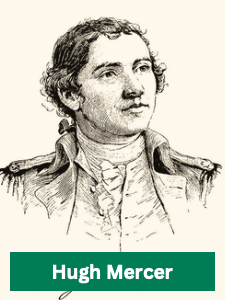
  • Hugh Mercer

    Hugh Mercer

    I was a Patriot leader who will be known forever as a martyr to the cause.

    I was born in Scotland in 1725 and studied medicine at the University of Aberdeen. In 1745, I joined the forces of Bonnie Prince Charlie, which tried and failed to restore the Stuart family to the throne, after which I escaped Scotland by going to America. I worked for eight years as a doctor in Philadelphia. And then I fought in the French and Indian War as a captain in the militia. In a raid in western Pennsylvania against Shawnee and Delaware native nations, I was severely wounded, got detached from my company, and spent two harrowing weeks alone in the wilderness before finding safety. Coming home, I moved to Fredericksburg, Virginia, married Isabella Gordon and established a successful medical practice.

    When the Revolution started, General Washington named me commander of the Flying Camp – a part of the Continental Army assigned to defend the colonies from the British – so I came to New Jersey to defend against British invasion from New York City in the summer and fall of 1776.

    Later, the Flying Camp was disbanded and I led forces at the Battles of Trenton. On January 3, 1776, we surprised the enemy at the Battle of Princeton by circling around them and attacking them from behind. I was out front, my horse was shot out from under me, and I was surrounded by British soldiers. I drew my sword and attacked, but I was overwhelmed, beaten with muskets and stabbed with bayonets.

    General Washington sent reinforcements, and they carried me from the field. I was cared for at the Clarke House, and I survived for nine days before my death on January 12.

    Later, in 1838, when a new county was created around Trenton, it was named Mercer in my honor. The county seal features an oak that I leaned against after receiving my wounds. And that tree, known as the Mercer Oak, lived until the year 2000.

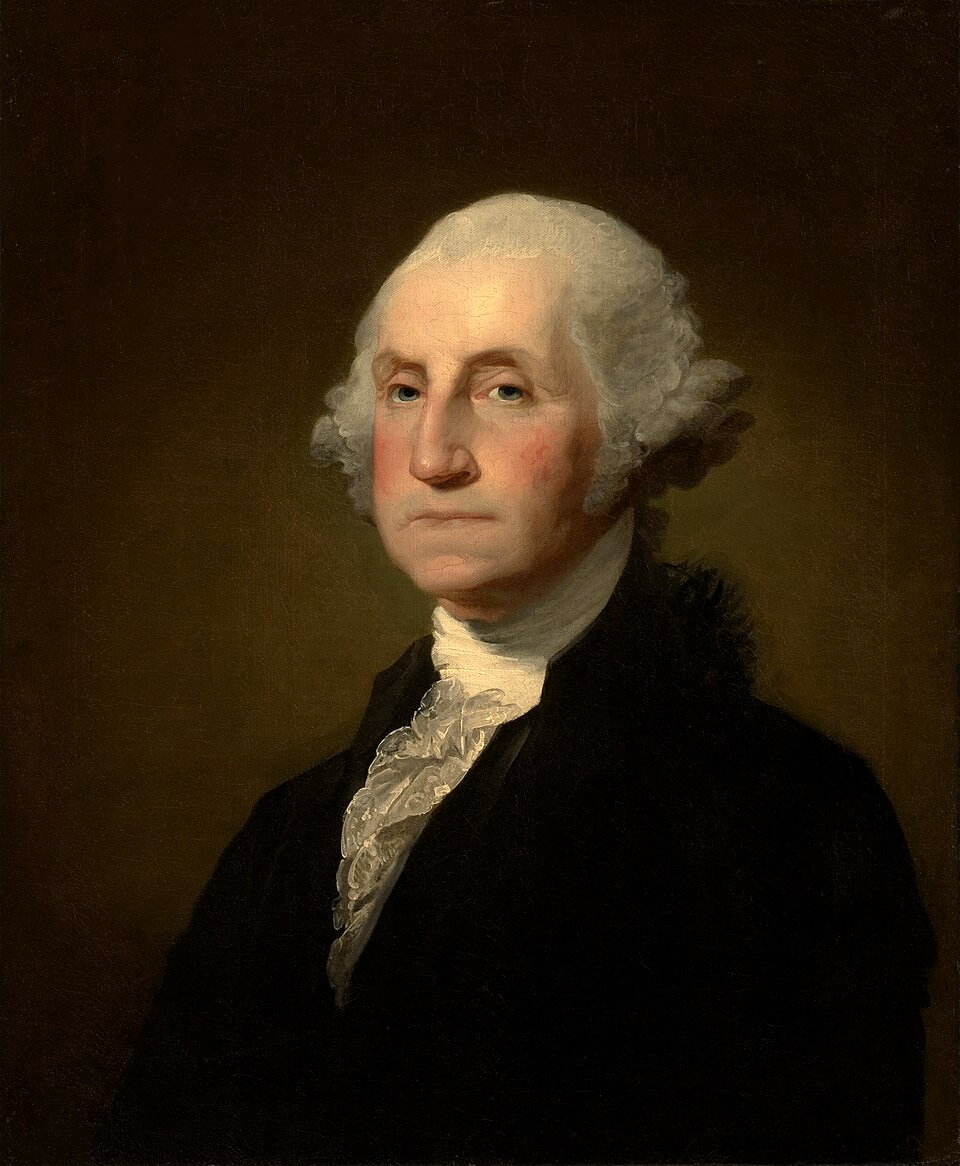
  • George Washington

    George Washington

    I was the first to lead, the first to step down, and the first to be remembered by a free people.

    I was born on February 22, 1732, in Westmoreland County, Virginia, the son of a land speculator and planter. After my father died, I didn’t inherit the family’s grandest estate, but I did inherit land, ten enslaved workers, and a hunger to carve out my own legacy. I became a land surveyor at seventeen, marking boundaries on the edge of the colonial frontier. But ambition pulled me toward the military.

    By twenty-one, I wore a Virginia militia uniform. The British sent me to warn the French off territory they both claimed. They refused. I returned with their answer—then led an attack that helped ignite the French and Indian War. I made mistakes. I surrendered. I learned. And I walked away with the kind of experience that couldn’t be taught in books.

    In 1759, I married Martha Custis, a wealthy widow, and managed Mount Vernon while serving in Virginia’s House of Burgesses. But politics turned to war. By 1775, I was named Commander-in-Chief of the Continental Army. For eight years, I held together a starving, freezing, threadbare army—crossed rivers in the dark, chased Redcoats through Jersey, and stood tall at Yorktown when Cornwallis surrendered. I spent barely a week at home in those years. The cause came first.

    After peace came, I did what few in power do—I gave it up. I retired to Mount Vernon, thinking I’d earned some quiet. But the country was still fragile. The Articles of Confederation had failed. I was asked to preside over the Constitutional Convention. When the dust settled, they asked me to lead again—this time as the first President of the United States.

    I served two terms, steady through the chaos, shaping the role with every step. And when it was time, I let go—no crown on my head, no power clutched in my fist. Just a quiet exit, and a legacy built on knowing when to walk away.

    On December 14, 1799, I died at home, the same place I’d always wanted to return to. My friend “Light-Horse” Harry Lee delivered the words that stuck:
    “First in war, first in peace, and first in the hearts of his countrymen.”

    That’s how I hope to be remembered—not just for how I fought, but for when I chose to walk away.