Author: Damien

  • Jacob Francis: A Free Man of Color’s Fight for Freedom

    Jacob Francis: A Free Man of Color’s Fight for Freedom

    After the Battle of Bunker Hill in June 1775, Americans laid siege to Boston. One of the soldiers, and a member of a Massachusetts regiment, was Jacob Francis, a free Black man. Born near Trenton in Amwell Township in 1754, he was indentured as a boy until age 21. He passed through several owners, the last being a Salem, Massachusetts merchant. Jacob eventually gained his freedom in January 1775. After he gained his freedom, Jacob enlisted in the Continental Army in October, despite General Washington and the Continental Congress’s orders not to enlist men of color. After the Boston siege, Jacob’s regiment fought to stop British General William Howe from capturing New York City. That campaign was unsuccessful for George Washington. He took his remaining troops and crossed the Delaware River at Trenton on December 2, 1776, preventing the British from following him. Jacob’s regiment joined Washington in Bucks County on December 21.

    Jacob was present during the famous night crossing of the Delaware River on December 25. After the Battle of Trenton, Jacob left the Continental Army and returned to his childhood home near Flemington. There, he learned that his mother was still alive. He then discovered that his last name was “Francis.” Jacob served actively in the Hunterdon County militia for the rest of the war. He later married and raised a family, and made it a priority that his children received an education. His youngest son, Abner, at 20 years old, began working with abolitionists in the Trenton area and later worked with Frederick Douglass. Jacob Francis and his family are perfect examples of the fact that the fight for freedom and equality in the Trenton and Flemington areas involved everyone.
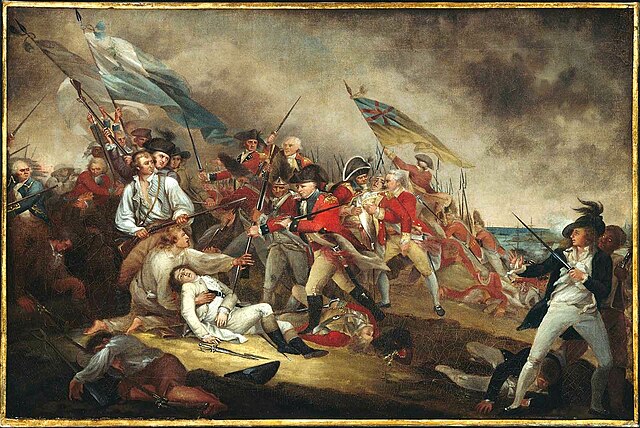
    The_Death_of_General_Warren_at_the_Battle_of_Bunker's_Hill

  • Charity Begins in a Tavern!

    Charity Begins in a Tavern!

    Adapted from the Trent House Eyewitness Collection*

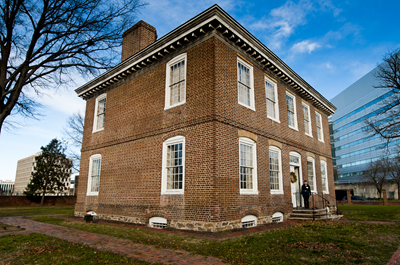
    Charity Brittain was born in 1720 into the prominent Tucker family of Trenton. She married Henry Bellerjeau, who died in 1746, and later married Joseph Britton, a shoemaker from Trenton. Charity operated a tavern in their home, which she continued to manage after Joseph’s death in 1755. Throughout her life, she supported the American Revolution’s cause.

    Trenton at the time had about a dozen taverns. Because of this, stagecoaches traveling between New York and Philadelphia often stopped there for meals or overnight stays. Her Indian King Tavern was a large, two-story frame house with four rooms on each floor, an attached kitchen, a wood house, a shed, a two-story stable capable of holding over 40 horses, and numerous fruit-bearing trees. During the French and Indian War in 1757 and 1758, Charity provided housing for British soldiers-accommodating six soldiers for 21 weeks and five days, two soldiers for 13 weeks, and three soldiers for over a week. During the Revolutionary War, her tavern served meals to army officers who were en route to join George Washington’s forces. The rest of her family was heavily involved in the war effort as well. Her sons served in the militia, and their hometown Trenton was heavily affected by two major battles in the area during the British and Hessian occupation in December 1776. Her tavern on King Street was right at the heart of these conflicts.

    In July 1779, her son Isaac took over the family business. That same year, a joint meeting of the New Jersey General Assembly and Legislative Council was held in their tavern-this was the meeting where William Livingston was reelected as governor. The government also met there at other times during the Revolution, despite the fact that Trenton was not yet the state capital.

    *Used with permission from the Trent House Association

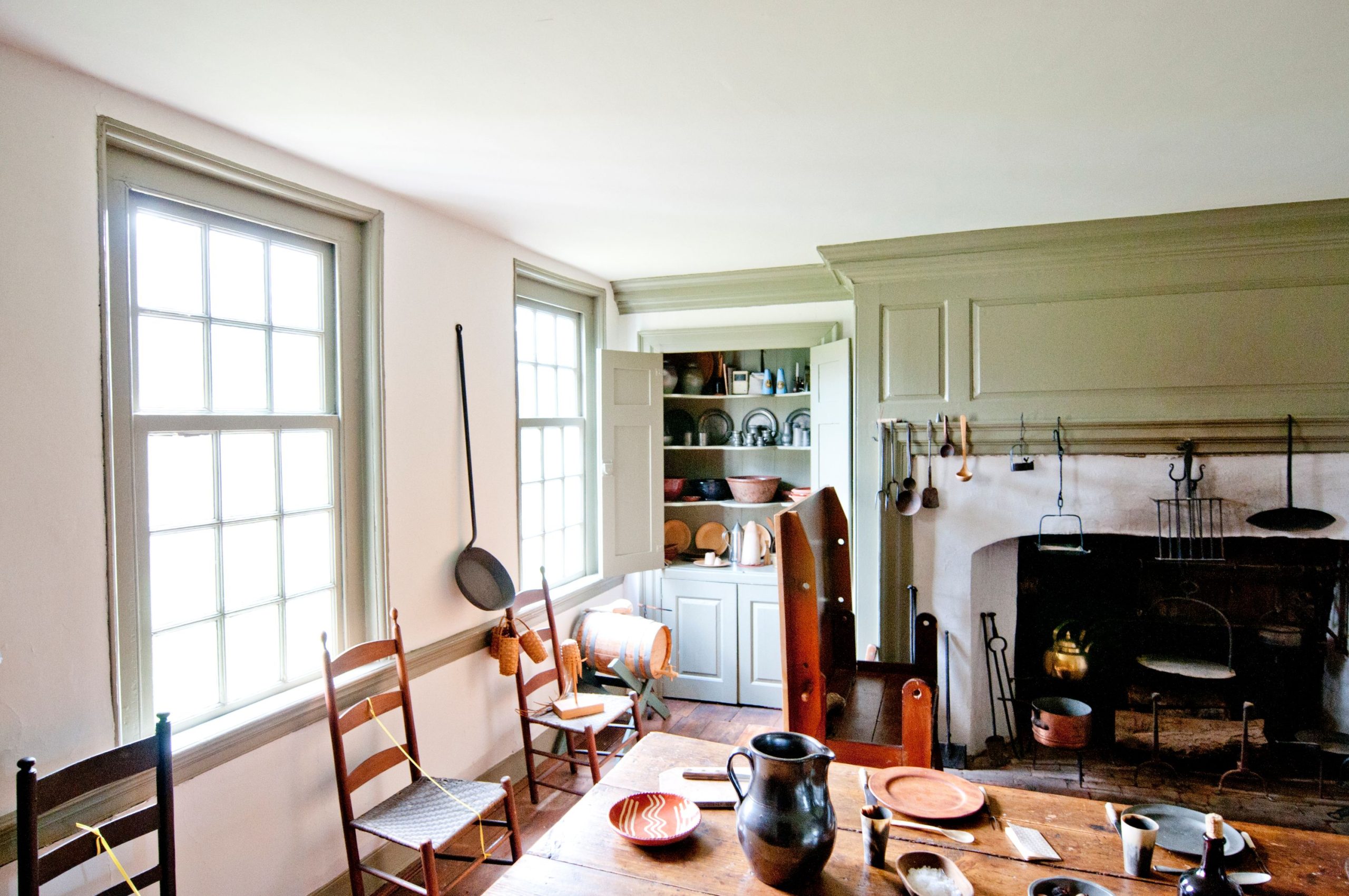
    12_27_12_TrentHouse_021 Resize

  • Mercer: Behind the Name

    Mercer: Behind the Name

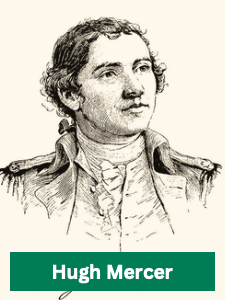
    Hugh Mercer was born on January 17, 1726, in Aberdeenshire, Scotland. He was heavily shaped by his education at the University of Aberdeen where he earned a degree in medicine. He would later use this education to become a remarkable physician and courageous soldier. Hugh served as an assistant surgeon with Jacobite forces during the pivotal Battle of Culloden in 1746. Afterwards, Mercer fled Scotland to escape persecution and found a new home in Pennsylvania.

    In Fredericksburg Virginia, Mercer quickly became a renowned physician, for both his skill and his innovative approach to treating battlefield injuries and illnesses. His blending of traditional Scottish remedies with cutting-edge medical techniques of his time led to a successful career in medicine. His strategic brilliance was put on full display during the French and Indian War; where he quickly was given the rank of colonel under General Edward Braddock. Mercer was a passionate supporter of American independence; he was also a trusted friend of George Washington. Mercer would eventually serve as a brigadier general in the Continental Army. During the Battle of Princeton in January 1777, Mercer displayed heroic courage, however he suffered fatal wounds while rallying his troops against the British. Though Hugh Mercer had treated many soldiers who had been wounded on the battlefield, he could not save himself from his own injuries.

    Mercer’s unwavering commitment to liberty left a profound legacy in American history. Today, his memory is preserved through statues, memorials, and the naming of Mercer County-found in seven other states: Illinois, Kentucky, Missouri, North Dakota, Ohio, Pennsylvania, and West Virginia. To honor his enduring spirit, the Mercer Oak at Princeton Battlefield State Park stands as a living symbol of his heroic contribution during the nation’s 250th anniversary, inspiring new generations to remember the heroism that helped shape our freedoms.

    placeholder-hugh-mercer